Japan Travel · Experiences
Japan Fireworks Festival Tickets in 2026: How to Get Paid Seats (Still Bookable for August)
Affiliate disclosure: This post contains affiliate links. We may earn a commission if you buy through them, at no extra cost to you. As an Amazon Associate we earn from qualifying purchases. Prices and specs are accurate as of the date noted and can change; always confirm on the provider's site.
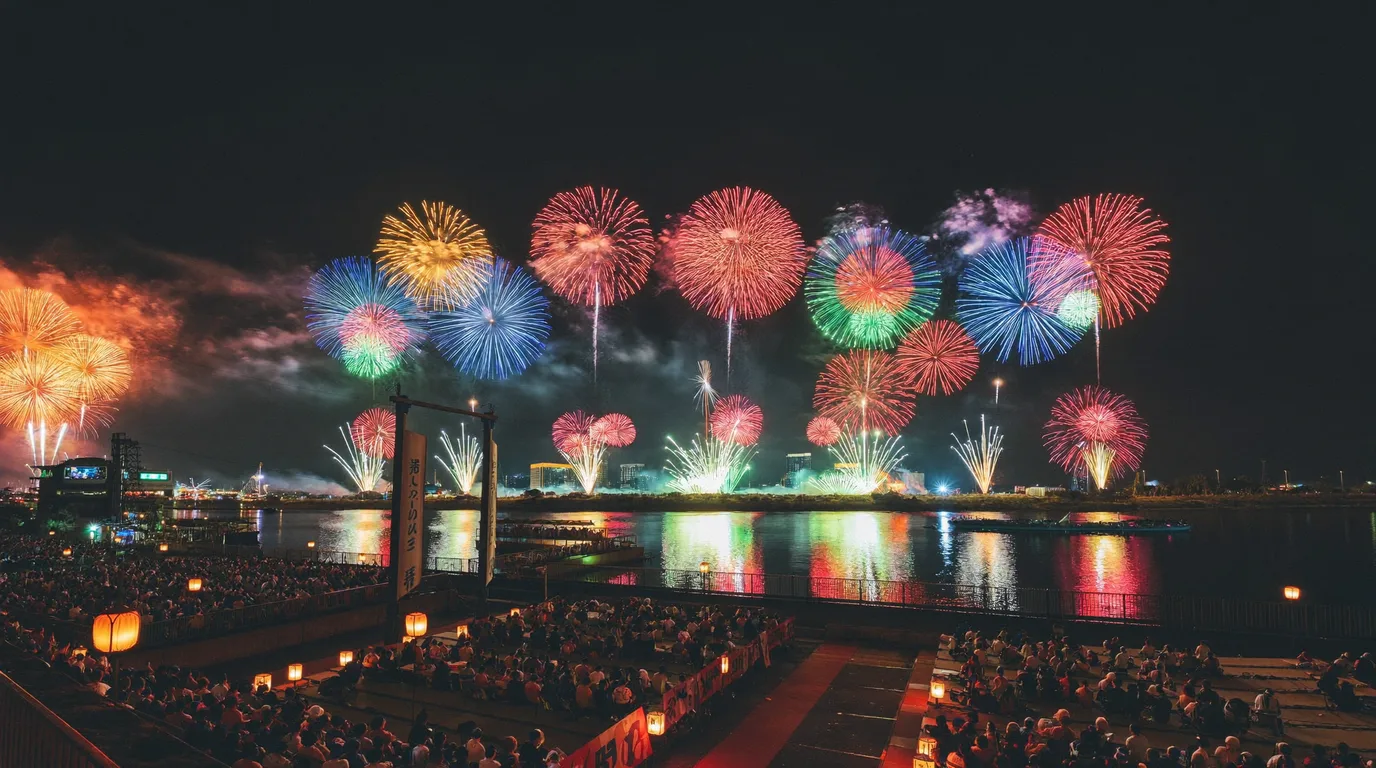
August is fireworks month in Japan, and if your trip lands in it, you have a shot at one of the country’s great spectacles. Nagaoka fires its famous Phoenix display over the Shinano River on August 2 and 3. Omagari, in Akita, hosts the national fireworks competition on August 29. Smaller but friendlier, Atami launches fireworks over its bay four times in August alone. So you search for tickets the way you would for any event back home, and the wall appears.
The best seats at Japan’s major fireworks festivals are not sold to whoever clicks first. Many are sponsor seats, allocated by lottery to people who applied by reply-paid postcard or on Japanese-only forms in May and June. Tokyo’s Sumida River festival announced its citizen-sponsor seats sold out on July 6; Nagaoka’s general lottery closed June 8 and its official resale shut July 20. What remains in late July is a patchwork: three official first-come sales still live (one of them, Gifu’s Nagaragawa, down to its last ¥4,000 tier), a handful of tour products holding seat allocations, and hotel plans in two onsen towns where fireworks come with the room. If this sounds like the Japanese-address wall on the official sumo site, it is the same structure wearing a yukata; we mapped that one in our sumo tickets guide.
This guide lists only what you can still buy. Every availability line was checked on July 23, 2026, and inventory moves daily; treat each line as a snapshot with its expiry date attached. Three doors close within days: Lake Suwa’s last first-come block ends July 26, Nagaoka’s bench-box resale ends July 28 at 5:00 pm, and Omagari’s official online sale, the single biggest thing still purchasable at face value, ends July 31 at 11:59 pm, all Japan time.
How paid seats work at Japanese fireworks festivals
First, recalibrate the word “seat”. At Japanese fireworks festivals a paid seat is often a marked rectangle of ground. Nagaoka’s masu is a tarp-floored box for six at ¥32,000, and its cheapest reserved option, the Phoenix sheet seat at ¥4,000, is a spot on a sheet, not a chair. Chair and table seats do exist, and Omagari tops out at a two-person platinum pair at ¥70,000. Read the seat type before you pay, because “reserved seating” can mean tatami-style ground with a river view.
Second, understand the sales calendar, because it explains why late July feels picked over. The best positions go to sponsors and lottery applicants in spring. The Hiroshima Minato Dream Fireworks published a textbook example for 2026: apply by reply-paid postcard arriving between June 1 and 7, or online with a mandatory Rakuten member registration; winners are notified by return postcard and pay at a Seven-Eleven counter, at prices from ¥1,000 for standing room to ¥33,000 for a six-person box. Every step of that chain, the domestic postcard, the return-mail notification, the konbini payment, assumes you live in Japan. First-come online sales follow in early summer on Japanese platforms, official resale windows come and go in July, and by festival week the only inventory left in English sits with tour operators who bought allocations months ago.
Third, know the refund reality, because it is stingier than most visitors expect. Fireworks festivals mostly go ahead in rain. If Nagaoka is postponed, August 2 slides to August 16 and August 3 to August 17, your ticket carries over, and no refund is offered for the date change. Cancelled outright, the refund is capped at 50% of the ticket price; stopped partway through, the refund is zero. Omagari allows no self-initiated cancellation: tickets move with a postponed date, and only full cancellation triggers a refund. Nagaoka tickets are also name-registered with ID checks at the gate, and resold tickets are invalid under Japan’s ticket-resale law, which is why this guide does not touch scalper sites.
Who this isn’t for
If you wanted the Sumida River fireworks on July 25, this guide arrives too late for you, and we will not pretend otherwise. Its paid citizen-sponsor seats sold out on July 6; the festival recurs on the last Saturday of July, and the 2027 section below tells you when to move. Skip this guide too if free viewing is fine for you: Atami’s beachfront is open to everyone, and most festivals have unticketed areas if you will trade a few hours of waiting for a spot. And if your dates cannot be pinned down, be careful with any paid seat: tickets are date-fixed, postponements slide by two weeks at Nagaoka, and the refund rules above do not bend for your itinerary.
Everyone else, a visitor with firm August (or autumn) dates who wants a reserved place to sit rather than a gamble on a riverbank, is who this is for.
How we picked
Five tests, in the order that decides whether you actually watch fireworks from a seat this summer.
Can you really buy it right now
Every route was checked for live availability on July 23, 2026, on the seller’s own page, calendar included. Sold out is stated as sold out, with the date the door closed.
Can you finish checkout in English
The official sales run on Lawson Ticket, e+, and JRE MALL, all in Japanese. We flag which routes go from search to confirmation in English.
The real price against face value
Official face values are the baseline: ¥4,000 to ¥48,000 at Nagaoka, ¥8,000 to ¥70,000 at Omagari. Tour products bundle transport and service on top, so we show both numbers.
What the seat actually is
Ground sheet, bench, chair, or table, and where it sits relative to the launch site. A $230 product and a ¥4,000 product can both be a spot on the ground.
What happens when the weather turns
Postponement and refund terms differ by festival and by platform, and some Klook “free cancellation” windows had already lapsed before publication day. We spell out each one.
The 2026 festivals you can still book
Not a list of every festival: only the ones where a paid place was still buyable on July 23, 2026, and through which door.
| Festival | Date (2026) | Where | Official paid seats (as of Jul 23) | Still bookable via | Paid-seat prices |
|---|---|---|---|---|---|
| Nagaoka Festival Grand Fireworks | Aug 2 and 3 | Nagaoka, Niigata | ✗ Sold out; lottery closed Jun 8, resale closed Jul 20; Japanese-language bench-box resale only until Jul 28, 5 pm | Klook seat area (Aug 3 only), Viator and Club Tourism tours | Face value was ¥4,000 to ¥48,000; tours from about $230 |
| Gifu Nagaragawa Fireworks | Aug 8 (slides to Aug 22 in severe weather) | Gifu City, Gifu | Nearly sold out; 17 of 18 seat types marked finished on Ticket Pia by Jul 23; only the ¥4,000 unreserved area on sale, first-come until Aug 8, 7:00 pm JST, Japanese checkout | Official sale (Ticket Pia / 7-Eleven); no Klook, Viator, or GetYourGuide product exists for this one | ¥4,000 to ¥90,000 face value; only the ¥4,000 tier left |
| Omagari National Fireworks Competition | Aug 29 | Daisen, Akita | ✓ On sale now, first-come, until Jul 31, 11:59 pm JST, Japanese checkout | Official sale (Lawson Ticket / e+), Klook overnight tour | ¥8,000 to ¥70,000 face value; Klook tour $336.39 |
| Lake Suwa Fireworks | Aug 15 | Suwa, Nagano | Nearly sold out; last block is C-gate at ¥7,800, first-come until Jul 26, wristband shipped to a Japan address around Jul 31 | JRE MALL (Japanese), Klook day tours, hotel rooftop plans | ¥7,800 official; tours $76.09 to $194.99 |
| Atami Sea Fireworks | Aug 5, 9, 18, 24 (more dates Sep to Dec) | Atami, Shizuoka | ✗ None this year; the organizer says no paid seats will be set up in 2026 | Klook and Viator day tours, ryokan guest-only viewing area | Tours from about $35.85 / ¥12,953 |
| Yodogawa Fireworks | Oct 17 | Osaka | Not on sale yet; member pre-registration Jul 27 to 31, sales open Aug 1 at 10:00 JST, no phone sales | Official sale from Aug 1; no English route listed yet | Prices not yet published |
| Tsuchiura National Fireworks Competition | Nov 7 (rain date Nov 14) | Tsuchiura, Ibaraki | Individual seats not yet announced; group boxes (5-box minimum, by fax) from Jul 14 | Klook tours already bookable, including one with admission at $53.65 | Group box ¥22,000 for up to 4; Klook $53.59 to $287.39 |
All availability checked July 23, 2026 on each official or platform page. Sumida River (July 25) is excluded as finished for 2026; its citizen-sponsor sale sold out on July 6.
Quick comparison table
| Route | Type | Price (Jul 23, 2026) | English checkout | Difficulty | Get it |
|---|---|---|---|---|---|
| Festival official sale Face value | First-come online | Omagari ¥8,000 to ¥70,000 | ✗ Japanese (Lawson Ticket / e+) | Omagari open to Jul 31; Nagaoka sold out; Suwa to Jul 26 | Official site |
| Sponsor seats and lotteries | Postcard or web lottery | Hiroshima example ¥1,000 to ¥33,000 | ✗ Postcard, konbini payment | Closed for 2026; a 2027 play | How it works |
| Travel-agency tours | Seat plus transport | Club Tourism from Tokyo; Viator 2-day ¥102,436 | ✓ English pages | Dates fixed, prices high | Check price |
 Klook Top pick Klook Top pick |
Seat area and tours | Nagaoka $229.95; Omagari $336.39; Atami from $35.85 | ✓ Card and email | Aug 3, Aug 29 and more still open | Check price |
 Viator Viator |
Tour packages | Nagaoka 2-day ¥102,436; Atami from ¥12,953 | ✓ Card and email | Refundable to 6 days out (Nagaoka) | Check price |
| Rakuten Travel Experiences | Fireworks cruises | July products only | ✓ English UI | ✗ No August fireworks products | Check availability |
| Fireworks-view hotels | Stay with viewing | Suwa’s Beniya ¥73,000 to ¥147,400 per person | ✗ Japanese official sites | Lakeside rooms gone; rooftop plans left | Check price |
Prices come from each festival’s or platform’s own page, all checked July 23, 2026. Inventory turns over daily in late July, so an open cell can close before its printed deadline if the allocation runs out.
The 7 ways reviewed in detail
The festival’s own online sale, face value if you can navigate Japanese
The biggest official sale still running is Omagari’s: the second first-come internet sale opened July 21 at 10:00 and runs until July 31 at 11:59 pm JST, as of July 23, 2026. Face values run from a chair seat at ¥8,000 through a two-person bench pair at ¥13,000, a four-person leisure-sheet block at ¥15,000, an embankment box for four at ¥30,000, and a four-person table at ¥38,000, up to the two-person platinum pair at ¥70,000, with camera seats at ¥13,000 to ¥25,000; wheelchair seats sold out May 27. This is the national fireworks competition, the event Japanese fireworks makers treat as their world championship, and buying at face value in late July is the best deal left this summer.
The other official sale still open is Gifu’s Nagaragawa fireworks on August 8, and it is down to its final tier. The general first-come sale, on Ticket Pia online and at 7-Eleven multicopy machines, opened July 8 at 10:00 and nominally runs until August 8 at 7:00 pm JST, but on July 23 the Pia sales page showed 17 of the 18 seat types, from the ¥5,000 early-entry ticket up to the six-person premium table at ¥90,000, already marked as finished. The one thing left to buy was the unreserved area at ¥4,000: a self-claimed spot on the riverbank downstream of Nagara Bridge, a folding cushion handed out at the gate, chairs banned in every seat category. The refund terms follow the pattern you have seen above: severe weather slides the whole show to August 22 with no refund for the date change and no second backup date, and a full cancellation refunds the ticket price minus the festival’s preparation costs.
Best for a traveler who reads some Japanese, or has a Japan-based friend, and wants the biggest possible show at the real price; at Nagaragawa, for whoever moves before the last ¥4,000 allocation runs out.
The weakness is the checkout. Sales run through Lawson Ticket and e+ (camera seats through Lawson Ticket only), one seat type per transaction, in Japanese; e+’s English storefront did not list Omagari as of July 23, 2026. Stock shifts daily and the sale ends July 31 regardless. The same Japanese-platform wall applies to Lake Suwa’s last ¥7,800 C-gate block on JRE MALL, which closes July 26 and ships the entry wristband only to a Japanese address around July 31. Nagaragawa’s checkout is Ticket Pia, and the wall holds there too: even the English-path Pia page for this event renders in Japanese as of July 23, and no Klook, Viator, or GetYourGuide product covers this festival, so there is no English detour. Nagaoka’s official channel is finished: the lottery sold out, the second draw was cancelled for lack of stock, the official resale closed July 20, and the last remnant, a Japanese-language resale of NFT bench-box tickets, ends July 28 at 5:00 pm.
Sponsor seats and the postcard lottery, the best seats you cannot buy this year
Kyosan-seki, sponsor seats, are how festivals fund themselves: you pay a sponsorship amount and are invited to a reserved section, often the best positioned in the venue. All 2026 windows are closed; the route stays in the table to explain where the good seats went. Hiroshima’s postcard-lottery mechanics are described above, and Sumida River’s citizen-sponsor seats opened May 10 and were announced sold out on July 6.
Best for planning 2027 with a Japan-based friend; the season calendar is in the last section of this guide.
The weakness is structural. Domestic return mail and konbini payment counters cannot be completed from abroad, so for a visitor this route effectively does not exist, and no reseller can legitimately bridge it for you at festivals like Nagaoka where tickets are name-registered and checked against ID.
Travel-agency tours, the packaged seat with transport attached
Traditional tour operators bought their seat allocations long ago, which is why they still have inventory when official sales are gone. Club Tourism runs an English special page for Nagaoka with train and bus departures from Tokyo, day trips and overnights, selling its own 40-person riverbank sections plus chair, table, station-side, and stadium seats, and states plainly that no Japanese address is required and overseas cards are accepted. JTB’s overseas arms in Singapore and Thailand have sold English-assisted two-day Nagaoka VIP-seat tours departing August 2, though one product URL had already gone dead by July 23.
Best for a traveler who wants the seat, the transport, and the bed solved in one purchase rather than assembled from parts.
The weakness is cost and rigidity: full packages at package prices, on fixed departure dates, and the mainstream domestic products are led by Japanese-speaking tour conductors rather than English guides, so read each page for the language it actually promises.
Klook, the English route that still has August seats
Klook is the reason a visitor arriving today can still sit down at Nagaoka. Its A-area seat product on the station side of the river listed availability for August 3 (August 2 was not selectable) at $229.95, with instant confirmation, a Nagaoka Station meeting point, and 100+ bookings, as of July 23, 2026. Note what the product is: a reserved area of ground, no chairs, cushions recommended, folding chairs and tripods banned, and Klook does not state which official seat category it corresponds to. For Omagari, Klook sells an overnight bus tour from Tokyo with reserved festival seating at $336.39, run by an operator rated 86% positive across 3,167 reviews, cancellable free up to 48 hours before. Around them sits a full August shelf: Atami day trips from $35.85 to $56.99, rated 4.3 to 4.8 across 140 to 524 reviews (one version watches from a chartered boat), Lake Suwa tours at $76.09 to $194.99, and Tsuchiura in November already bookable from $53.59.
Best for anyone who wants to finish the whole thing in English tonight, card and email only, and get a confirmation they can show at a meeting point.
The weakness is the markup and the fine print. Nagaoka’s own reserved sheet seating sold for as little as ¥4,000 at face value, so $229.95 for a ground spot is a steep convenience premium. And “free cancellation” carries different clocks: 14 days’ notice on the Nagaoka product, already lapsed by July 23, so you would buy it non-refundable; 48 hours on the Omagari tour. Same label, opposite outcomes.
Viator, one big Nagaoka package with real refund terms
Viator’s main fireworks product for August is a two-day Nagaoka bus tour from Tokyo at ¥102,436 per person, in stock on July 23, 2026 and operated by Club Tourism International: round-trip bus, one business-hotel night, three meals, and a reserved boxed viewing seat, capped at 40 travelers. Its refund terms are the best of any route here: free cancellation to 6 days before, a full refund if the fireworks are cancelled before departure, and a refund of the seat portion after departure. For Atami, Viator lists a fireworks-and-Hakone-shrine day tour from ¥12,953, rated 5.0 across 48 reviews.
Best for a traveler who wants Nagaoka fully handled with an actual safety net if the weather or their plans collapse.
The weakness is the language gap inside the package: a Japanese-speaking conductor using a translation app, not an English guide, at over ¥100,000 per person. Viator’s fireworks shelf also turns over fast; its Sumida River cruise was already marked unavailable by July 23.
Rakuten Travel Experiences, the honest zero for August
We checked Rakuten Travel Experiences because its premium Tokyo fireworks cruise gets attention every summer. Its 2026 cruise covered the Adachi fireworks on May 30 and Sumida River on July 25, and the listing showed “this experience is currently not bookable” on July 23, 2026, with no August fireworks products behind it.
Best for nobody this August, which is exactly why the row exists; a comparison that hides its empty cells is an ad.
The weakness is the empty shelf itself; if Rakuten reloads for autumn the calculus changes, but as of the check date there is nothing to buy.
Hotels with fireworks plans, the room-with-a-view route
In Atami and on Lake Suwa, the hotel is the seat. Suwa’s lakeside Hotel Beniya sold a fireworks-stay plan from April 20 on its own site: the lake-view rooms are long gone, and what remained on July 23, 2026 were mountain-side and annex plans at ¥73,000 to ¥147,400 per person at double occupancy, with access to the hotel’s rooftop viewing seats; the hotel itself says the fireworks are not visible from those rooms, only from the roof. In Atami, ryokan association members hand staying guests a free pass to a guests-only viewing area on July and August festival nights, and some inns sell packages with confirmed viewing spots and transfers.
Best for a couple building an onsen night around the fireworks, with bath, dinner, and show in one purchase and the crowd on the other side of the fence.
The weakness is scarcity and language. These plans exist in tiny numbers, the best rooms sell out months ahead, checkout is mostly on Japanese official sites, and a “fireworks plan” does not automatically mean a view from your window, as Beniya’s own wording shows. Confirm what the plan includes before paying.
Which option should you choose?
You can be in Niigata on August 3. Klook’s A-area product was the last English-bookable seat at Nagaoka itself as of July 23; accept that it is non-refundable now and bring a cushion. For August 2, only the tour routes (Viator, Club Tourism) still had a way in.
You want the biggest show at face value and can handle Japanese. Omagari’s official sale runs to July 31 at 11:59 pm JST on Lawson Ticket and e+, ¥8,000 to ¥70,000. The best pure deal left in 2026; recruit a Japanese-reading friend if you need one. If your date is August 8 near Nagoya, Gifu’s Nagaragawa festival still sold its ¥4,000 unreserved tickets on Ticket Pia as of July 23, with every reserved seat type already gone.
English only, start to finish. Klook: Nagaoka August 3, the Omagari overnight tour, Atami, Suwa, and Tsuchiura all close in English with instant confirmation. Viator matches it for Nagaoka with better refund terms at a much higher price.
You are staying in Tokyo. Atami is the play: fireworks over a bay on four August dates, day tours from $35.85, no seat anxiety because there are no seats to fight over. For a boat-borne evening on Tokyo’s own water, see our yakatabune dinner cruise guide.
Everything you wanted is sold out. Two honest fallbacks: Atami’s free beachfront with a ryokan stay for the guests-only area, or Tsuchiura on November 7, the autumn national competition, where Klook tours were already bookable in July, including one with admission at $53.65.
You want the true first-class seats in 2027. Play the lottery season like a resident: Sumida’s citizen-sponsor sale opens around May 10, Nagaoka’s lottery runs late May to early June, and postcard windows like Hiroshima’s fall in the first week of June. You will need a Japan address for the postcards and konbini payments.
FAQ
Can I still get fireworks festival tickets for August 2026?
Yes, as of July 23, 2026, but the doors close in sequence. Omagari’s official first-come sale (Aug 29 festival) runs until July 31 at 11:59 pm JST. Lake Suwa’s last official block ends July 26. Gifu’s Nagaragawa festival (Aug 8) is down to ¥4,000 unreserved tickets on Ticket Pia, on sale until August 8 at 7:00 pm JST or until the allocation runs out, with all reserved seat types sold out and no English platform carrying it. Nagaoka’s official stock is gone, but Klook listed an August 3 seat area at $229.95 and Viator a two-day tour at ¥102,436. Atami needs no ticket at all.
What are kyosan-seki (sponsor seats) and why can’t foreigners buy them?
They are the reserved sections festivals give to people who pay a sponsorship amount, and they include the best positions in the venue. The application machinery assumes a Japanese life: a reply-paid postcard in a June window, a lottery, a return-postcard notification, and payment at a konbini counter, as Hiroshima’s 2026 rules show. None of those steps can be completed from abroad, and the 2026 windows closed in spring. It is a residency requirement in effect, not a rule against foreigners, and the practical answer is the tour and hotel routes above, or a Japan-based friend for 2027.
How much do paid seats cost?
At face value, as of July 23, 2026: Nagaoka ran ¥4,000 to ¥48,000; Omagari runs ¥8,000 to ¥70,000; Nagaragawa listed ¥4,000 to ¥90,000, though only the ¥4,000 unreserved tier was still on sale; Lake Suwa’s last block was ¥7,800; Tsuchiura group boxes are ¥22,000 for up to four, five-box minimum. Through English platforms, expect $53.65 to $229.95 for seat-inclusive products and ¥102,436 for Viator’s full Nagaoka package. Yodogawa (Oct 17) had not published prices as of the check date; its sale opens August 1.
What happens if it rains?
Usually the show goes on; these festivals fire in rain and postpone only for severe weather. Nagaoka: postponement slides Aug 2 to Aug 16 and Aug 3 to Aug 17, tickets carry over, no refund for the change; full cancellation refunds at most 50%, and a show stopped partway through refunds nothing. Omagari: no self-cancellation, tickets carry to the postponed date, refunds only on full cancellation. On the tour side, Viator’s Nagaoka package refunds in full if the fireworks are cancelled before departure, while Klook’s Suwa tour pages warn there is no refund if the show is cancelled after the bus departs. Go or no-go decisions land on the day itself, so a working connection helps; see our Japan eSIM comparison.
Is it worth paying, or can I watch for free?
It depends on the festival. At Atami, free is the design: the beachfront is open, there are no paid seats in 2026, and a ryokan stay adds a guests-only area. At most river festivals, free viewing means claiming ground hours early and watching from a wider angle. At Nagaoka the question answers itself: the organizer states there are no free seats inside the venue and no same-day sales. If you have exactly one August night in Japan for fireworks, a reserved place turns the plan from probable into certain.
Can I buy tickets without a Japanese phone number or address?
Route by route: Klook and Viator, yes, card and email only. Club Tourism’s English Nagaoka page, yes, explicitly. Official first-come sales, mostly no in practice: the platforms are Japanese, and Lake Suwa’s wristband ships only to a Japanese address. Sponsor lotteries, no, for the postcard and konbini reasons above. Hotel fireworks plans, usually Japanese official sites only, and the fireworks entitlement may not carry over if you book the same room through an international OTA.
Which festival should I pick if my dates are flexible?
Three profiles. Nagaoka (Aug 2 and 3) is the heavyweight, with the Phoenix display over a wide river, and the hardest ticket, best reached now through tours. Omagari (Aug 29) is the connoisseur’s night, a juried national competition where the makers themselves compete, and the only major festival still selling official seats in late July. Tsuchiura (Nov 7, rain date Nov 14) is the same competitive format in autumn, the easiest to plan from here, with English tours already bookable in July; bring warm layers for a November riverbank after dark.
Bottom line
The honest picture on July 23, 2026: the postcard lotteries are history, Nagaoka’s official seats are gone, and what remains for August runs through four doors. Omagari’s official sale, open until July 31, is the best value in the country if you can work a Japanese checkout. Klook is the English route that still has seats, from the last bookable Nagaoka spot on August 3 to the Omagari overnight tour, with Viator’s refundable Nagaoka package as the premium alternative. Hotels in Atami and Suwa sell the view with the room. And if all of that slips past you, Tsuchiura in November is already bookable, waiting for the travelers who read the deadlines this year and intend never to miss one again.